
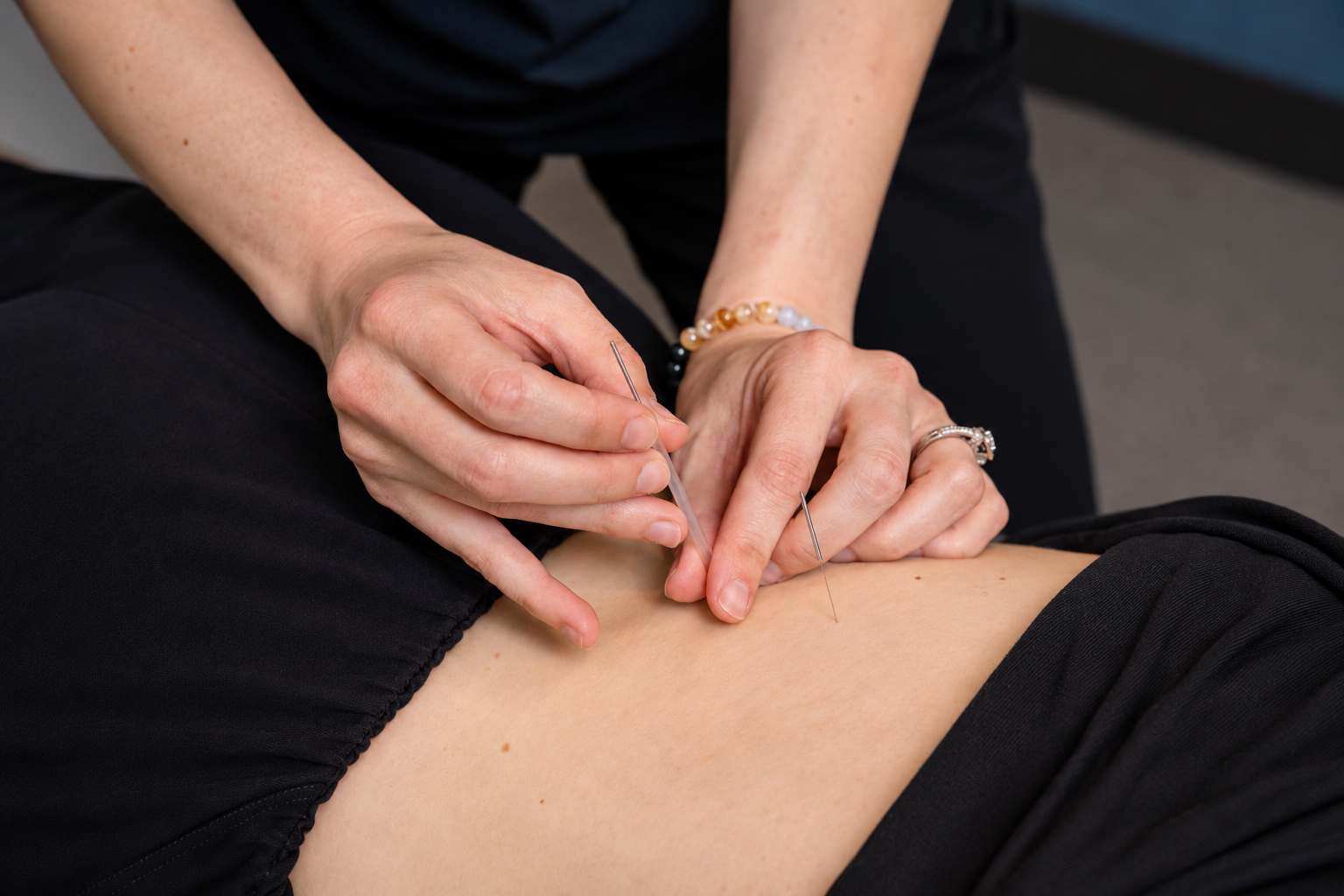
Acupuncture in Halifax
Relieve Pain. Release Tension. Restore Balance.
Dry Needling vs Medical Acupuncture
Dry needling is a treatment technique used to address muscle pain, tension, and movement restrictions. During treatment, a very fine, sterile needle is inserted into specific areas of muscle tissue, often targeting sensitive or tight areas known as myofascial trigger points. The goal is to help reduce muscle-related pain, improve mobility, and support your overall rehabilitation. Dry needling may be used alongside physiotherapy treatments such as manual therapy, stretching, strengthening exercises, and rehabilitation programs.
Contemporary medical acupuncture is a precise peripheral nerve stimulation technique, in which fine solid needles (acupuncture needles) are inserted into specific areas, and stimulated manually or with electricity for therapeutic purpose. It involves inserting fine, sterile acupuncture needles into carefully selected areas of the body to stimulate sensory nerves and other tissues involved in pain processing and muscle function. Unlike traditional acupuncture, which is based on concepts such as meridians and energy flow, Contemporary Medical Acupuncture uses a neurophysiological approach to guide treatment. It may be incorporated into chiropractic care to help manage certain types of musculoskeletal pain and muscle tension.
Both needling techniques may be helpful for certain musculoskeletal conditions, including:
- Neck and shoulder tension
- Lower back discomfort
- Muscle tightness and trigger points
- Sports-related muscle pain
- Hip and gluteal muscle discomfort
- Muscle-related headaches
- Restricted movement associated with muscular tension
- Inhibited or weak muscles
What Is Electro-Acupuncture?
Electro-acupuncture builds on conventional acupuncture by adding gentle electrical stimulation to the inserted needles.Small electrodes are connected to selected needles, allowing the practitioner to deliver controlled electrical pulses at an adjustable frequency and intensity. Patients often describe the sensation as a mild tapping, pulsing, or tingling. The electrical stimulation is intended to influence nerve activity and pain processing and may be used as part of a treatment plan for certain musculoskeletal conditions. Your chiropractor will determine whether electro-acupuncture is appropriate based on your symptoms, health history, and treatment goals.
Does Dry Needling or Acupuncture Hurt?
Most patients tolerate these treatments well, although everyone’s experience is different. Because the needles are extremely fine, insertion may cause only a brief pinching sensation. Depending on the treatment, you may also experience:
- A mild ache or feeling of pressure
- A brief muscle twitch
- Tingling or warmth
- A gentle pulsing sensation during electro-acupuncture
Some patients find acupuncture relaxing, while dry needling may occasionally produce temporary muscle soreness. Your practitioner will explain what to expect and adjust or stop treatment if you experience discomfort.
Are These Treatments Covered by Insurance?
Dry Needling: When provided by our physiotherapist, Fiona, dry needling may be covered under your physiotherapy benefits.
Contemporary Medical Acupuncture/Electro-Acupuncture: When provided by our chiropractor, these treatments may be eligible for coverage under your chiropractic benefits.
The treatments are covered under Physiotherapy or Chiropractic, not Acupuncture. Insurance coverage varies between providers and policies. We recommend confirming your individual benefits before your appointment.
Book Your Appointment Today
Move Better. Feel Better. Live Better.