
Shockwave Therapy in Halifax
Target Persistent Pain. Support Recovery. Restore Movement.
Shockwave Therapy
Are you struggling with persistent heel pain, Achilles tendon discomfort, tennis elbow, or another stubborn musculoskeletal condition that hasn’t responded to traditional treatments? At Maritime Chiropractic & Wellness, we offer Radial Shockwave Therapy, a non-invasive treatment that uses acoustic pressure waves to stimulate targeted tissues and support the body’s natural healing processes.
Shockwave therapy is commonly used for certain chronic tendon and soft tissue conditions, particularly when symptoms have persisted despite rest, exercise, or other conservative treatments.
Our goal is simple: to help reduce pain, improve mobility, and get you back to the activities you enjoy.
What Is Shockwave Therapy?
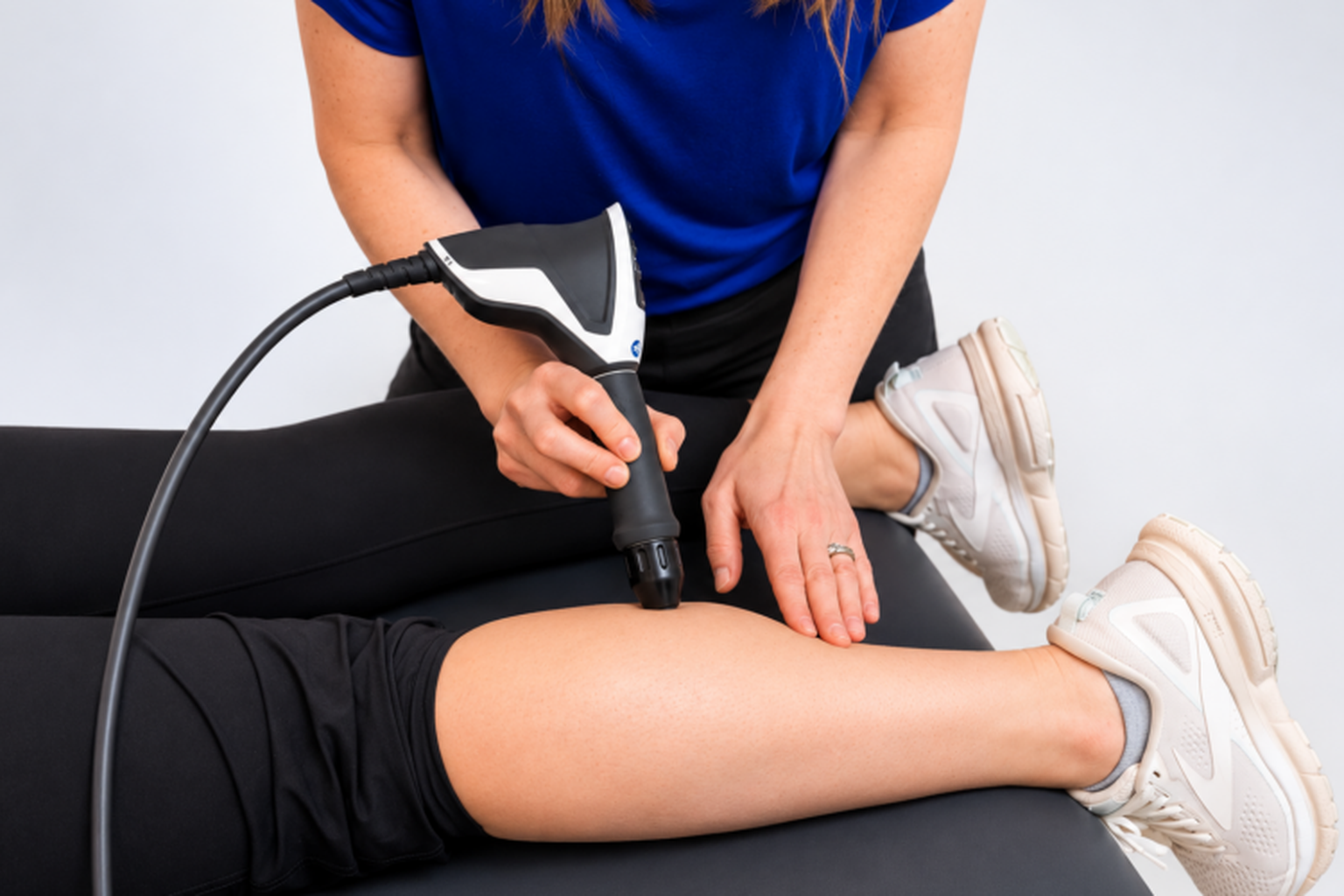
Shockwave Therapy (SWT) is a non-invasive treatment that uses acoustic pressure waves to stimulate targeted tissues. At Maritime Chiropractic & Wellness, we use Radial Shockwave Therapy, also known as Radial Pressure Wave Therapy. During treatment, a handheld device delivers repeated mechanical pressure waves through the skin into the underlying muscles, tendons, and soft tissues. These mechanical impulses may help influence pain sensitivity, stimulate local tissue responses, and support recovery in certain musculoskeletal conditions. Shockwave therapy is often incorporated into a comprehensive treatment plan that may also include therapeutic exercises, manual therapy, and activity modifications.
How Does Shockwave Therapy Work?
Targeted Treatment. Tissue Stimulation. Improved Function.
Shockwave therapy utilizes high pressure waves of compressed air to mechanically break up calcification and scar tissue that forms on the body’s tissues when placed under repetitive stress. The shockwave device accelerates a projectile by compressed air. The motion and weight of the projectile produce kinetic energy, which translates along with the transmitter into sound energy in the form of an acoustic or sound wave. The acoustic wave is transmitted into the tissue via a coupling gel and collectively this is known as “Radial Pressure Wave Therapy”. The propagation of acoustic waves break apart the underlying problematic scar tissue, stimulates osteoblast (cells that re-organize bone) and fibroblast (cells that re-organize soft tissue such as tendons and ligaments) activity in and around the injured site.
What Conditions Can Shockwave Therapy Help With?
Shockwave therapy is commonly used for persistent tendon-related and other selected musculoskeletal conditions.
Conditions that may benefit include:
- Plantar Fasciitis (Plantar Heel Pain): Persistent pain along the bottom of the heel.
- Achilles Tendinopathy: Chronic pain and stiffness involving the Achilles tendon.
- Patellar Tendinopathy (Jumper’s Knee): Pain involving the tendon below the kneecap.
- Tennis Elbow (Lateral Epicondylitis): Persistent pain along the outside of the elbow.
- Golfer’s Elbow (Medial Epicondylitis): Tendon-related discomfort along the inside of the elbow.
- Greater Trochanteric Pain Syndrome: Pain along the outside of the hip, often involving the gluteal tendons.
- Hamstring Tendinopathy: Persistent tendon-related pain, particularly near the sitting bone.
- Calcific Rotator Cuff Tendinopathy: Shoulder pain associated with calcium deposits within a rotator cuff tendon.
- Myofascial Trigger Points: Certain muscular pain conditions involving sensitive or tender areas
- Frozen Shoulder
- Shin splints
Where Did Shockwave Therapy Originate?
Shockwave technology was originally developed for medical procedures involving the treatment of kidney stones. This technique, known as extracorporeal shockwave lithotripsy, uses focused shockwaves to break kidney stones into smaller fragments. Researchers subsequently explored how mechanical pressure waves could influence bones, tendons, and other musculoskeletal tissues. Over time, different forms of shockwave therapy were developed for orthopedic and rehabilitation applications. Today, shockwave therapy is used in physiotherapy, sports medicine, and other healthcare settings for selected musculoskeletal conditions.
How Many Shockwave Therapy Sessions Will I Need?
The number of treatments recommended depends on your condition, how long you’ve been experiencing symptoms, and your response to care. A typical treatment plan may involve 3–6 sessions, often spaced approximately 5–10 days apart. Treatment sessions generally range from 10–30 minutes, depending on the area being treated and whether additional therapies are included. Your practitioner will recommend an individualized treatment schedule based on your assessment findings and recovery goals.
Is Shockwave Therapy Safe?
Shockwave therapy is a non-invasive treatment that is generally well tolerated when used appropriately.
However, some patients may experience temporary side effects, including:
- Mild discomfort during treatment
- Temporary soreness or tenderness
- Redness or minor swelling
- Occasional bruising
Shockwave therapy is not suitable for everyone. Certain medical conditions, medications, or injuries may require additional precautions or make treatment inappropriate. Your chiropractor or physiotherapist will review your medical history and determine whether shockwave therapy is a safe and appropriate option for you.
Book Your Shockwave Therapy Appointment Today
Relieve Discomfort. Restore Function. Return to What You Love.